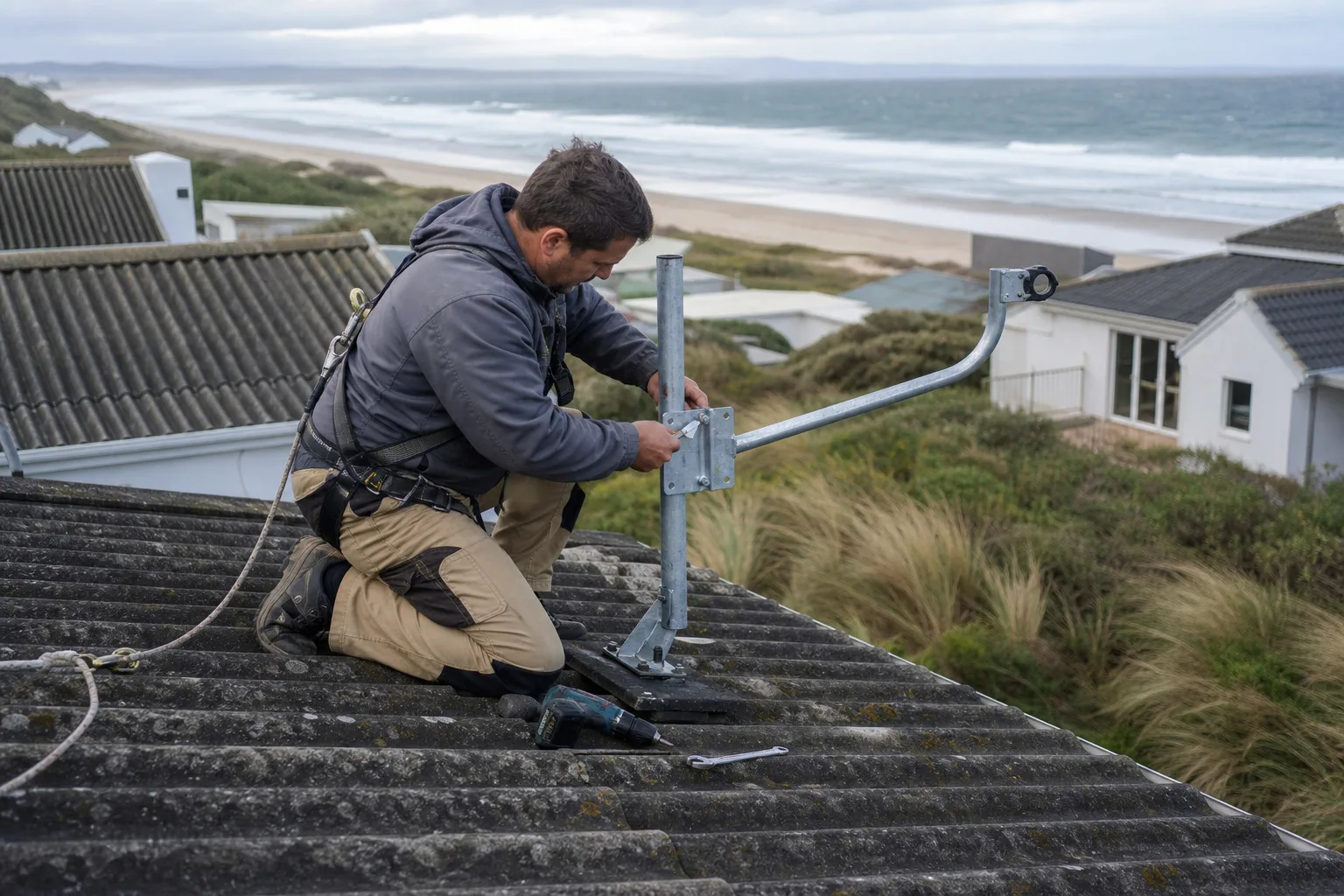
From the outside, a satellite install looks the same whether it's bolted to a townhouse in the suburbs or a beach cottage in Yzerfontein. It isn't. The West Coast is one of the harshest environments in the country for outdoor equipment, and an installation that would last a decade inland can start failing here in a couple of seasons if it's done without thinking about the conditions. Understanding why is the difference between a setup you forget about and one you're forever nursing.
Salt is the silent killer
The Atlantic air carries a constant fine mist of salt, and salt loves metal. It creeps into connectors, sits on bracket bolts and works its way under cheap cable sheathing. Left unprotected, an ordinary connector can corrode to the point of signal loss within a year or two: long before the same part would even tarnish inland. That's why every fitting we use on the coast is chosen to resist corrosion, and every connection is properly sealed against the air. It's also why a coastal dish tends to drift and fault sooner, and why the signs your dish needs re-aligning are worth knowing.
Wind never really stops
Yzerfontein's wind is famous, and it's relentless. A dish is essentially a sail, and a bracket that's merely "good enough" will flex, creep and eventually loosen under months of gusting. Once a dish moves even slightly, your signal margin shrinks and the picture starts dropping in bad weather. We mount on heavy-duty brackets, anchor into solid material, and torque fixings to hold through a southeaster: because a dish that stays exactly where we put it is a dish that keeps working. Getting that right from day one is the whole point of a proper dish installation and alignment.
Sun and UV do their part too
Bright coastal sun bakes cheap cable until the outer sheath goes brittle and cracks, letting moisture in. Plastic clips perish, and tape-only weatherproofing fails fast. We run cable rated for the exposure, clip it properly, and avoid the lazy shortcuts that look fine on installation day and fail the following winter.
What a coast-proof install actually looks like
- Marine-grade, corrosion-resistant brackets and fixings
- Properly sealed, weatherproofed connectors at every joint
- UV-stable cable, clipped and routed to survive wind and sun
- A dish anchored into solid material, not just surface-fixed
- Alignment set with enough signal margin to ride out rain and gusts
It's not just the dish
The same thinking applies to everything we fit outdoors. CCTV cameras need weatherproof housings that won't fog or corrode. Outdoor WiFi access points for the stoep or a flatlet have to be sealed against the damp. Even a TV aerial has to be braced for wind. A team that only thinks about the coast when it comes to satellite will let you down everywhere else: which is why we build every outdoor job, from a new DStv installation to a camera mount, the same careful way.
Why DIY and bargain installs usually fail here
Every season we're called out to "fix" an install that was done on the cheap, and the pattern is almost always the same. A general handyman or a quick weekend job uses whatever connectors and cable are in the bakkie, taped rather than sealed, on a light bracket that was never meant for coastal wind. It works perfectly on the day: the sun's out, the air's still, the picture's crisp: and everyone's happy. Then the first winter arrives. The tape lets go, salt gets into the connector, the bracket creeps, and by mid-season the picture is breaking up in every gust. The owner has now paid twice: once for the bargain install, and again for someone to put it right properly. It's not that the first installer was careless in general: it's that they treated a coastal job like an inland one. Out here the conditions are unforgiving enough that the corners you can cut elsewhere simply don't survive, and the only real saving is doing it correctly the first time.
The payoff
Working with an accredited Yzerfontein DStv installer from the start is what keeps a coastal setup working season after season.
Coast-proofing an install costs a little more in parts and care up front, and it saves you many times that in call-outs, lost signal and frustration down the line. A dish that holds its alignment through three winters, cabling that doesn't crack, connectors that don't corrode: that's what "neat work that lasts" actually means out here. If your current setup is already showing its age, or you're putting in something new and want it done right for the conditions, send us a WhatsApp. We've spent years learning what the West Coast does to equipment, and we build accordingly.